The Russian's have a saying, “As you meet the New Year, so will you spend it”. Here I am in NYC, spending this New Year's Eve with my injured friend and another good friend, at his apartment just hanging out. I am perfectly happy to be doing this, and it seems quite an appropriate way to welcome 2013. This past year I have been learning to slow down, to reflect, to prioritize close relationships, and to be patient. This New Year's Eve feels right on track as I continue this long and scenic journey in the new year.
As I reflect back on 2012, I think the biggest lesson that kept appearing in many different forms is the need to face problems head on. If I can turn at look at problems as they begin to appear, they are often small, and are always more manageable than they will be later on. Whether the problem is interpersonal conflicts, conflicting strategies, unpleasant news, or dashed dreams, it will only fester over time. Tonight I am slowing down, reflecting on 2012 with gratitude and awe, and considering my goals and wishes for 2013. Hopefully I can continue to develop a more reflective life, and also act more quickly to confront small problems in 2013. I am also working to let go of the limitations I subconsciously place on myself and my dreams, among other things. What are you trying to create in your life in the new year? Is there anything you are letting go of from the year that's just passed?
Monday, December 31, 2012
Sunday, December 30, 2012
Day 36 & 37: Emergency Preparedness
Last night's blog post was derailed by an emergency, with my good friend falling on wet stairs and losing his two front teeth! This involved a lot of blood, the emergency room, and very little sleep last night. Luckily, he will be fine and it could have been much worse, but this was still a fairly significant injury. Needless to say, this was not how I had expected to spend my night. I was mostly calm, helpful, and not trying to fight the fact that the night was so unpredictably unpleasant for my good friend and myself. This reaction was in sharp contrast to an experience from earlier in the day involving the New York City subway system, which was the blog post I had planned to write last night before my friend's accident. I had been heading to his apartment in the afternoon and had my travel plans altered by a closed subway line. This unexpected inconvenience meant I had to take three subway lines instead of two, and took me an extra half an hour to get to my friend's apartment. Unlike the true emergency later in the night, this slight inconvenience left me feeling extremely agitated, frustrated, and stressed. Even though I knew that it was not a big deal in the grand scheme of things, my level of agitation felt disproportionate to this minor change in my plans.
I'm great to have along if you get into an emergency situation, but if you are stuck in traffic or lost I tend to have a bad attitude. This left me wondering why I react so differently to these two types situations. Why did I feel so much more negatively toward the slightly bad experience of a closed subway line rather than to the legitimately scary one of a serious accident? I like to plan everything ahead and make great logistical plans, so when they go awry, I get very frustrated. However, in a true emergency I feel calm and focused because there is a problem to be solved and I can't indulge in self-pity or wishing things were different, I just have to act.
Friday, December 28, 2012
Day 35: A Good Life
![]() |
| My grandparents as newlyweds at a New Years Eve party, 1945 |
Personally, I have measured the quality of my life primarily through external achievements. And yet, in looking at my grandmother's life, these are not the means by which she lived a good life. The meaning of her life lay in the deep relationships she maintained with friends and family, and in the way she took care of her neighbors. These are character traits of hers that I emulate. As I learn to slow down, live more in the present, and experience my emotions more fully, I hope that my life will contain many of the same qualities as hers did.
Thursday, December 27, 2012
Day 34: Secrecy vs. Privacy
![]() |
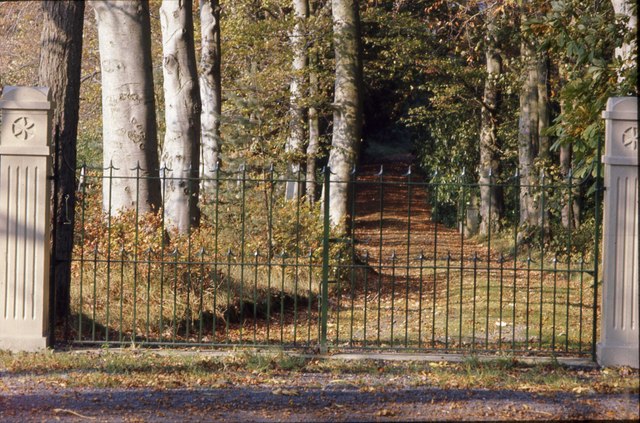
| The private entrance to Brookfield House, Banbridge (2) by Albert Bridge |
Living wholeheartedly means accepting who I am, including those things I don't particularly like about myself. As I work on self-acceptance, I have come to believe that secrecy is inherently an expression of denial or dissociation, and cannot accompany true acceptance of who I am. Even if I ultimately wish to change something, the first step is to accept what already is. But, is there a distinction between secrecy and privacy? If I don't want someone to know something about me or my experiences, is that always a bad thing? What if it's only particular people that I don't want to know particular things? I think that any time I don't want someone to know a particular piece of information about me, it is worth analyzing the motivation for this desire. Am I ashamed? Am I trying to avoid a particular reaction? Does it feel too emotionally charged to handle at the moment? Am I afraid of material consequences such as losing a job or promotion, losing a friend, or putting someone else in danger? If it is a judgment that I am avoiding, I believe it falls into the secrecy category. If it is simply not someone's business, then I think it might just be an issue of privacy.
Sometimes, however, it is unclear why I do not want to reveal something - I am confident that the person will not judge me and they do not hold any power over my life. In these cases, I think the motivation is one of creating distance, or preventing a certain level of intimacy. Is this secrecy? Privacy? Something else entirely? I have always been a very private person, but is this just a way to avoid true intimacy? If someone knows you fully, then you are vulnerable to them. They have the power to hurt you. By keeping my distance from people, I can protect myself from this potential. I do reveal very private things about my life through my poetry, hip hop lyrics, and this blog. And yet, there is a builtiin distance to written communication. Perhaps that's why I like it so much. I just have to keep reminding myself, small steps and small actions will lead to big changes eventually.
Wednesday, December 26, 2012
Day 33: Small Steps
This has been an intense day. Going through my grandmother's apartment, packing up her things, reliving great memories, and mourning the loss of her life with my family is surreal. And yet I feel mostly numb. I do feel sad, but it's a far away kind of a feeling. It's hard to bring the sadness to the forefront of my awareness. Even as I struggle to do so, I can see certain changes compared to how I would have experienced this a month ago, before I started rewiring my brain. I was able to engage each family member in a discussion of how they were feeling. This may not sound significant if your family is one that acknowledges feelings in general, but in my family this was extremely noteworthy. I received more logical answers than visceral responses from everyone, but my question was answered, and I learned something new and intimate about various family members in the process. I keep reminding myself that change is gradual, that every small step is integral to the process of transformation.
I have been reading an interesting book about kaizen, a Japanese method of change that involves continuous improvement through extremely small daily steps. Kaizen involves asking small questions, taking small steps, solving small problems, giving yourself small rewards, and recognizing small improvements. This fits very well with the process I designed to rewire my brain, and also involves a lot of patience, which I have been cultivating slowly. Would you like to go on a slow walk with me today?
Tuesday, December 25, 2012
Day 32: Rest
All of this self-reflection can be exhausting. I feel like there are a million internal eyeballs analyzing everything I'm doing, thinking, feeling, saying, not saying, etc. This is definitely revealing a lot to me about own internal workings, but damn is it tiring!
Today being a very popular holiday, well someone eles's cultural holiday anyway...and so I shall rest.
So enjoy whatever it is you are doing today, and I will see you again tomorrow, dear reader.
Merry Non-Denominational Winter Holiday to all.
Today being a very popular holiday, well someone eles's cultural holiday anyway...and so I shall rest.
So enjoy whatever it is you are doing today, and I will see you again tomorrow, dear reader.
Merry Non-Denominational Winter Holiday to all.
Monday, December 24, 2012
Day 31: Visions
Where is the line between visionary thinking and obsessing about the future, or wanting to please the ego in some way? To be a visionary, you have to see something this is not yet there, and then materialize it. For me, this can take the form of a new piece of art, a new event, a new community. Visioning involves a focus on the future, rather than the present moment. And while my life would certainly be simpler without visions, I do not want to leave this type of thinking behind as I become more centered in the present moment. And yet, there are many steps along the process from vision to reality that are unpleasant, or in service to the greater idea rather than the present moment. How do these fit in with a new type of mindful presence I am working to develop? Additionally, not all visions are inspired. Some are simply the ego striving to be seen, to be recognized. I have experienced both ego-based visions, and those that seem more divinely inspired. At the moment, I am trying to distinguish more clearly between the two. For guidance on this question, I turn to one of my favorite poets, the 13th century Sufi mystic Rumi.
From The Soul of Rumi. Translated by Coleman Barks.
Moving Water
When you do things from your soul, you feel a river moving in you, a joy.
When actions come from another section, the feeling disappears.
Don't let others lead you. They may be blind or, worse, vultures.
Reach for the rope of God. And what is that? Putting aside self-will.
Because of willfulness people sit in jail, the trapped bird's wings are tied,
fish sizzle in the skillet.
...
Don't insist on going where you think you want to go. Ask the way to the spring.
Your living pieces will form a harmony...
Subscribe to:
Posts (Atom)